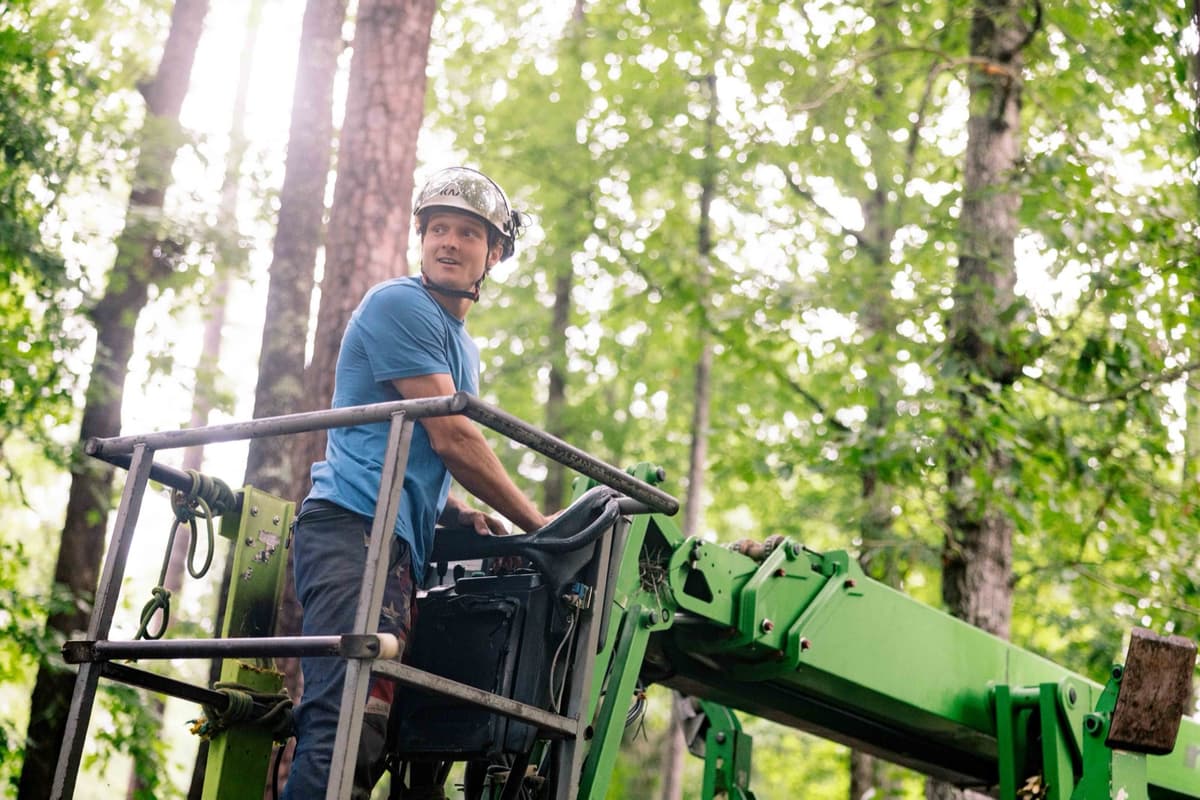
Tree Hazard Inspections in Tallahassee
The tree that falls on a house in Tallahassee almost always looked fine.
That's the uncomfortable truth about tree hazards. The most dangerous conditions — internal decay, root plate failure, included bark in a co-dominant union — develop out of sight, over years, with no visible signal until a storm provides the load that the compromised structure can no longer handle. By then, it's an insurance claim and an emergency crew, not an inspection and a pruning job.
A professional tree hazard inspection changes that timeline. Miller's arborists hold TRAQ qualifications from the International Society of Arboriculture — the industry standard for systematic tree risk assessment. We evaluate every tree on your property from the root flare up, using standardized protocols to rate the likelihood of failure, the consequence of that failure based on what the tree would hit, and the overall risk level. When the visual inspection reveals conditions that need deeper investigation, we use resistograph drilling and sonic tomography to map internal decay without harming the tree. The report we give you is clear, documented, and defensible — the kind of assessment insurance companies and municipalities accept.
When You Need a Tree Hazard Inspection
- You notice visible signs of decline such as dead branches, crown dieback, bark separation, leaning, or fungal fruiting bodies at the base of a tree
- A significant weather event has recently occurred and you want to assess whether your trees sustained hidden damage
- Construction, excavation, or grading work has taken place near the root zone of mature trees on your property
- You are purchasing a property and want a professional assessment of the trees before closing
- Your insurance company or municipality requires a documented tree risk evaluation
- Large, mature trees overhang your home, driveway, patio, or play areas and you want peace of mind about their condition
Our Inspection Process
-
Detailed visual assessment. Our arborist systematically examines each tree from the ground up, evaluating the root flare, trunk, major scaffold limbs, branch unions, and overall canopy condition. We check for cracks, cavities, included bark, dead branches, fungal indicators, soil heaving, and signs of root compromise.
-
Advanced diagnostics when warranted. If the visual inspection reveals conditions that need further investigation, we may use a resistograph to measure wood density along a drill path or sonic tomography to create a cross-sectional map of internal decay. These tools give us objective data about how much sound wood remains in a compromised trunk or limb.
-
Risk rating and written report. All findings are compiled into a clear written report that includes a risk rating for each inspected tree, photographs documenting conditions of concern, and specific recommendations for mitigation. Risk levels follow the ISA Tree Risk Assessment framework, giving you a standardized and defensible evaluation.
-
Mitigation consultation. We review the report with you in person, explain the findings in plain language, and discuss your options. Depending on the situation, mitigation may involve targeted pruning, cable and brace installation, monitoring on a schedule, or removal of trees that cannot be made safe.
Why Tallahassee Properties Need Hazard Inspections
Tallahassee's mature urban canopy includes many trees that are 60, 80, or over 100 years old. While these large specimens are tremendously valuable for shade, beauty, and property value, they also carry greater risk simply due to their age and size. The longer a tree has been growing in one spot, the more time decay organisms, root disturbance, and structural stress have had to accumulate.
Several species common across Leon County are particularly prone to hidden hazards. Water oaks frequently develop internal decay that can hollow out a trunk while the exterior bark still looks intact. Live oaks may develop ganoderma root rot, a fungal infection that destroys the root plate and can lead to whole-tree failure during storms. Even healthy-looking pines can harbor bark beetle infestations that weaken them from within. Tallahassee's sandy soils also provide less anchorage than heavier soil types, making root stability a critical factor in any risk assessment. Regular hazard inspections catch these problems early, giving you time to address them before they become emergencies.
Frequently Asked Questions
How much does a tree hazard inspection cost in Tallahassee?
Inspection costs depend on the number of trees being evaluated and whether advanced diagnostic tools are needed. A single-tree assessment is typically quite affordable, and multi-tree property evaluations are priced based on scope. Contact us for a free initial phone consultation to discuss your situation and get a clear estimate.
How often should I have my trees inspected?
For properties with large, mature trees near structures, we recommend a professional inspection every two to three years. You should also schedule an inspection after any significant storm, following nearby construction, or anytime you notice a change in a tree's appearance such as new lean, sudden branch dieback, or mushrooms growing at the base.
What happens if a tree is found to be hazardous?
If our inspection identifies a hazardous condition, we provide specific recommendations based on the severity of the risk and the value of the tree. In some cases, targeted pruning or structural support can reduce risk to acceptable levels. In other cases, removal is the safest course of action. Our report gives you the information you need to make an informed decision, and we can perform any recommended work promptly.
Areas We Serve
Miller's Tree Service provides tree hazard inspections throughout Tallahassee, Leon County, and the surrounding North Florida and South Georgia region including Wakulla County, Gadsden County, Jefferson County, Thomasville, and Crawfordville.
Contact us today at (850) 894-TREE for a free consultation about your tree inspection needs.


